And this second one has ones from between the years 1971-1977,
though it doesn’t have all the years, it still has a lot of
classic work (including the original Cutey Honey and Zambot 3):
They’re in FLV format, so they aren’t too big. Â Amazing stuff. Despite the modest file sizes, there is a lot of material here. A lot of things I never saw anything of before. Must find out what the amazing WWII air battle show is. Also a few things I first encountered on foreign satellite TV, like the “Wandering Sun” from 1971, a story about a girl guitarist/singer.
I never heard of .flv format before, but my codecs had no problem playing it. Old Anime
Well, I’m still following Kaichou wa Maid-sama! but am thinking that it’s rather lost its way and it could have been better as a 12-episode series.
Hakuoki Shinsengumi Kitan didn’t end at 12 episodes, it just stopped in mid-story and starts again with a second series sometime in the next few months.
Angel Beats!had a decent ending and is a series worth watching.
As for the summer season, I checked some reviews, and I’m only watching one new show, the excellent Occult Academy. Â Funny, characters you can care about, an end-of-the world situation, and at least one really cute girl.
I also tried the well-reviewed High School of the Dead, but with its scenes of slaughter, and fan-service involving half-naked highschool girls being gnawed by zombies I found it a bit much for my tastes.
Just thought I’d post some history-related items that caught my attention.
First there’s the sinking of the “Lancastria” on the 17th June 1940, off St Nazaire in France, a few days after the Dunkirk evacuation. At this time about 100,000 British support troops and civilians were still stranded in France, and some of them had boarded the Lancastria in an effort to escape, when it was attacked by German aircraft and rapidly sank. Only about 2500 of those on board were saved, whereas the total number on board is thought to have been between 6000 and 9000. By any standards, this was a terrible disaster, and the British Government did their best to hush it up by issuing a “D” notice to muzzle the press and threatening the survivors with court-martial if they talked. Clearly it was thought at the time to be one piece of bad news too many, nor did the presence of so many stranded men fit with the freshly minted myth of the “Dunkirk Miracle.”  Even in later years the Government proved very sensitive on the subject, possibly because they feared legal action from families on the grounds that the ship had deliberately been grossly overloaded.
Then there’s the sorry fate of the “City of Adelaide” which you must have heard of, as it’s one of only two or three composite wood/iron sailing clippers still in existence (the other famous one being the Cutty Sark). You hadn’t? Anyway, it’s currently in Scotland, hauled up on a slipway after sinking at its moorings, and waiting for somebody to  secure its future. Scottish funding dried up to the point where the current custodians, the Scottish Maritime Museum, applied to North Ayrshire Council for permission to demolish it and thus rid themselves of this burdensome relic. A shameful tale. A historic building would not be treated in this shabby fashion. Or would it?
Grand Hotel Glasgow (on left) demolished 1968
I just finished reading “Britain’s Lost Cities” – a chronicle of architectural destruction, by Gavin Stamp.  The built-up centres of Britain’s major cities bear little resemblance today to their appearance in photographs taken before the Second World War. You might be forgiven for thinking that the damage was mostly done by the Luftwaffe, but in fact it had its roots before the war began, and was carried on with enthusiasm during the Fifties and Sixties. There was a burning zeal to knock down and replace anything old, regardless of merit.  It’s become a cliche to say that the post-war planners did more damage than the Luftwaffe, but that doesn’t make it any less true.  Many fine and substantial buildings, burnt by wartime raids but still restorable, were demolished almost before the rubble was cold.  During the destruction of Coventry in the notorious raid, the planners, who by 1939 had already smashed up many of the city’s medieval buildings, were said to be giving a thumbs-up every time an obstacle to their redevelopment plan went up in flames.
All this might be forgivable if the new was an improvement on the old, but in many cases the old looked very impressive while the new was often a ring road that smashed a hole through an old district, or was a dreary shopping centre, or some other building that nobody would miss if it was demolished overnight. In many cases the developments of the fifties and sixties are (like Birmingham’s Bull Ring) being redeveloped again because of their inherent dreariness, or because of building defects, while the Victorian or earlier buildings that escaped the vandals still stand.  One might say that there was outrage when the barbarians and vandals came by air from Germany, but indifference when they came from offices in Britain. Contrast British hatred of the old with the civic pride of the Continentals, who in many places rebuilt their waist-high piles of rubble to look almost exactly like their pre- war towns.
Nearly 3 months since I started watching the Spring season. Â I’ve continued to watch Kaichou wa Maid-sama! which continues to please, Â also Hakuoki Shinsengumi Kitan, Â Angel Beats!, which develops in a rather surprising way, and (courtesy of Crunchyroll) Ichiban Ushiro no Daimayou and Durarara.
Admittedly I followed “Ichiban Ushiro no Daimayou partly” because it was on Crunchyroll so I didn’t have to download it, but some of the episodes were good, and there is an acceptable amount of fan-service. The ending is just irritating and I struggled to remember who some of the female characters were; there were so many of them… Â The fiery Junko however is rather likeable.
Durarara continues to be the best of the bunch, even though it has shifted its focus from Celty, now rather a wasted character, to the three teenagers Mikado, Anri, and Masaomi.
Working! About part-timers at a restaurant. So irritating that I only watched half of the first episode.
Heartcatch Precure Another series in the “Futari wa Pretty Cure” universe. For addicts only, I think.
K-On! Series 2 The same five girls as in series 1 re-appear. In this episode they mess around and fail to recruit any new members. Seems a bit lacking – so far I see no reason to watch this rather than re-running the earlier series.
Mayoi Neko Overrun! Bizarre school comedy involving cats and cosplay. Even after watching it I don’t know what it’s about and I’m not sure I care.
Giant Killing A brilliant Japanese soccer player returns to Japan to revive the fortunes of a failing Japanese soccer team. Might be good – check it out if you are a soccer fan.
B Gata H Kei This was trailed as a sex comedy about a 15 year old virgin girl who intends to have 100 sex partners. I hadn’t memorised the Japanese title so when I downloaded and viewed yet another 1st Ep, the stunningly crude dialogue and the clumsy sexually-charged situations took me completely by surprise. Partway through the episode I’d had enough of this dodgy tripe, and switched off. Now removed from my computer. Apparently this is broadcast at 1am in Japan, so heck knows who it’s for – certainly not well-behaved Japanese school students who would be in bed asleep at this hour. If you live in the UK you might be wise to give this one a miss, and check out the vaguely-drafted legislation made active earlier this week:
If you come to the attention of the plods as a weirdo who watches stuff like this or the equally toxic “Kiss x Sis“, they just might make an example of you.
Another mixed bag but there may be some worth following:
Mizuki
Kaichou wa Maid-sama! Ayuzawa Mizuki is the school student president, and because of family circumstances (her father deserted the family), she works part-time at a “maid cafe” in another district. The school enrolment is 80% boys, and Mizuki enforces the rules with a firm hand, which doesn’t make her any more popular with the boys, whom she seems to dislike anyway. One day she is discovered at work by the school’s most eligible boy, Takumi Usui, much to her dismay. However, instead of exposing or blackmailing her, he just hangs around, staring at her, and even helps her out with a couple of problems. Looks like this will be a pleasing shoujo romantic comedy. Despite the maid thing, there’s no overt fan-service.
Chizuru
Hakuoki Shinsengumi Kitan In Meiji-era Japan, while disguised as a boy, Yukimura Chizuru goes to look for her father, who has gone to work on Kyoto and then stopped writing to her. She is chased by some toughs, and then witnesses a fight between them and some supernatural monsters. She finds that she has been captured by the Shinsengumi. (At this point non-Japanese viewers, or readers, should do some Googling to get themselves up to speed with who the Shinsengumi were. While their portrayal in this anime is liable not to be accurate, they were a real Japanese sword-wielding militia formed in the turmoil of the Meiji restoration forced by the arrival of powerful foreign forces. They were involved in some factional fighting.) Some of the Shinsemgumi seem slow to catch on to Chizuru being a girl, despite her overtly feminine face and mannerisms, for the subtitles in the Aoi-Anime sub refer to her indiscriminately as “he” , “boy” or “she”. It turns out that the Shinsengimi are also interested in her father’s mysterious disappearance, and instead of rubbing her out as an inconvenient witness, they decide to keep her as a permanent guest, still dressed as a boy.
So far, this anime has a strong and consistent period feel, and some nice character designs. I found the first episode rather confusing – to untutored Western eyes, Chizuru at first glance is obviously a girl. (Non-Japanese viewers may be slow to realise that what Chizuru is wearing is supposed to be typical boy’s clothing of the period). I’m still not sure who the supernatural fanged guys were or who was fighting who, except that the ones chasing Chizuru apparently died.
Angel Beats! The lead character Otonashi is dumped (like the viewer) straight into a world where a girl, Yuri, wielding a large gun, exhorts him to pick a weapon and attack an silver-haired girl below. Otonashi refuses, and approaches the girl “Angel”, but it seems he says the wrong thing, for she sprouts a blade and fatally stabs him. After at least one painful re-incarnation, Otonashi learns that the girl/warrior “Angel”  is controlling a world consisting essentially of one school, and passing on those in it to be re-incarnated – not necessarily as people. Allegedly. Otonashi is persuaded to join Yuri’s armed group, which is resisting being re-incarnated. In a bizarre second half of ep#1, an all-girl band plays in the school hall while Yuri’s gang hold off Angel with machine-gun fire, and the dinner tickets they staged this battle to capture swirl through the air like autumn leaves.
Arakawa Under the Bridge The protagonist Ichinomiya Kou is the heir to a vast and powerful corporation. A real high-achiever, Kou lives his life by the philosophy of never owing anything to anyone. Unfortunately while crossing a bridge one day he is hassled by punks, and ends up falling into the river and being rescued by a mysterious girl, Arakawa, who claims to be an alien. It’s not hard to guess what happens next. She refuses Kou’s extravagant offers and in return for saving his life merely asks that he stay around and love her. Which puts her in control of his life. While living like a down-and-out under the bridge, Kou is introduced to another wierdo, who is wearing a kappa suit. While this might have potential as an oddball comedy, after 22 minutes it’s already becoming irritating.
Ichiban Ushiro no Daimayou The hero, Akuto Sai, happily arrives as magical academy where his ultimate ambition is to be a high priest. Unfortunately, at the medical screening, a cigar-smoking talking bird divines that his future career will be… Demon Lord. A hundred years previously, a Demon Lord raised an army and messed everything up, so this news rapidly gets around the school. Everything Akuto says or does thereafter is mis-interpreted by the students as evidence of demon lord-ship. There are some good touches in this episode: the gag about the health check being performed by a chain-smoking bird, the very prickly relationship between Akuto and Hattori, a sword-wielding girl in a very short skirt, the trains on magical tracks, and Hattori’s friendship ceremony using her sheathed sword. There is also a fair amount of crud, like the fanservice, the fact that everyone in the series is an idiot, and the arrival of a clutch of a whole bunch of violent magical girls in the closing minutes, and the suspicion that this will become another tiresome harem comedy. So which way will it go?
DVD – The Exquisite Short Films of Kihachiro Kawamoto (Kimstim, 2008, 99 mins, NTSC, subtitled)
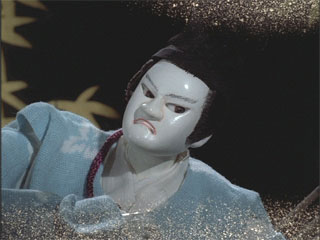
Hunter: "The Demon"
Kawamoto has been making his stop-motion puppet animation films for half a century now. They draw on ancient Japanese legends , Noh, Kabuki and Bunraku doll theatre, and 20th century short novels, to create art films with a uniquely Japanese poetic character. Kawamoto learnt his skills at the legendary Kratky Studios in Prague under the mentorship of Czech animator Jiri Trnka.  The results are quite different from the popular Japanese anime which uses cell (and latterly computer) animation and is influenced by manga comics and early American cartoon animation.
The DVD contains seven short films varying in length from 8 to 19 minutes. I might have seen one of them previously: “Dojoji Temple” in which a young monk on a spiritual journey encounters a mysterious woman whose frenzied passions turn her into large white serpent. The monk hides under the temple bell, but the serpent, wreathed in flame, wraps herself around it, and when the bell is lifted, only the monk’s charred corpse is left. (and if you think this sounds weird, you should see the other short films on the DVD)
An essential DVD if you are interested in animation as art.
YouTube is a useful resource for sampling old anime not readily available anywhere else. For instance, Nanto Anime (www.youtube.com/user/NantoAnime) has, at time of writing, subtitled episodes of Cyborg 009, Ribon no Kishi, Gegege no Kitaro series #1, Magical Girl Sally series #1, and Rainbow Sentai Robin. (I never heard of the last one either, but it’s like Cyborg 009 with even less sign of having employed a science adviser).
Quality is surprisingly good – full-screen 360p & full speed with an adequate connection, but each episode is split into 3 segments.
I forgot about printed sources when writing the previous post.
If you are interested in anime movies and OVAs from 1983-1995 then “The Anime Movie Guide” by Helen McCarthy (Titan,1996) is just what you need. There’s also “500 Essential Anime Movies – The Ultimate Guide” by Helen McCarthy [2008] (not seen).
The Anime Encyclopedia by Clements & McCarthy is a larger work (pub.2001, 550pp) which claims to cover Japanese animation since 1917. Hovever its coverage of prewar anime is slight; of the first 30 titles in the AniDB list, it namechecks six and gives detail on none. It does review the famous propoganda movie “Momotaro’s Divine Sea Warriors” (1945) and its 1943 prequel, but almost all other reviews are post-1960. There’s a later edition (2006, 896pp) (not seen) which reportedly has “added quite a bit of material on prewar and wartime anime.”
I’ve been compiling lists of the pre-war and pre-1970 animation from Japan:
• A list of short pre-war animation from Japan. These titles can be found on a recent DVD/DVD set.Link to Old Anime table (work in progress.) A few samples are also on crunchyroll.com/anime
• A page in the blog with a list of post-war anime, mainly movies: /WEBSITE/Old Anime (work in progress)
For the following AniDB links you need to use MS Internet Explorer, which displays the filter box properly.
• List of old TV anime series, from the 1960’s onwards:external link
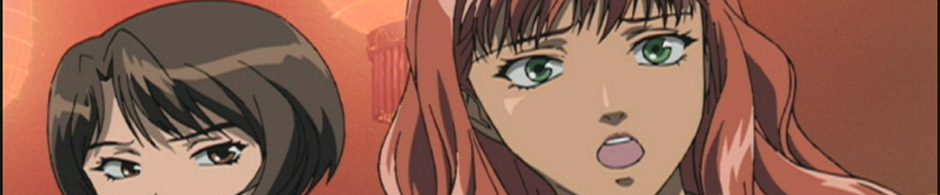
 They’re in FLV format, so they aren’t too big. Â Amazing stuff. Despite the modest file sizes, there is a lot of material here. A lot of things I never saw anything of before. Must find out what the amazing WWII air battle show is. Also a few things I first encountered on foreign satellite TV, like the “Wandering Sun” from 1971, a story about a girl guitarist/singer.